
Estate, vintage, and antique are three of the most common words in fine jewelry, and they are easy to mix up. The good news is that they are simple once you see them side by side.
Two of the words are about age. One is about ownership. That is really the whole secret.
In this guide we walk through each word in plain language, share a few pieces from the Boylerpf collection as examples, and finish with some friendly tips for shopping with confidence.
The Short Answer
Antique jewelry is at least 100 years old. Think Victorian brooches, Edwardian lockets, and early Art Deco pieces. This is the oldest of the three groups.
Vintage jewelry comes from a past era but has not yet reached 100 years. Most jewelers use the word for pieces roughly 20 to 99 years old, such as mid-century gold or a glamorous cocktail ring.
Estate jewelry simply means pre-owned. It describes the jewel’s history, not its age. An estate piece can be antique, vintage, or even fairly recent.
So a single piece can wear two labels at once. A Victorian brooch can be antique and estate. A 1960s bracelet can be vintage and estate. The words work together rather than against each other.
What Makes Jewelry Antique
Antique pieces are the ones that have already lived for a century or more. They often show the hand skills of their time, like engraved gold, carefully set stones, and clever details that let a brooch become a pendant. Here are two antique pieces from the Boylerpf collection, from two very different eras.
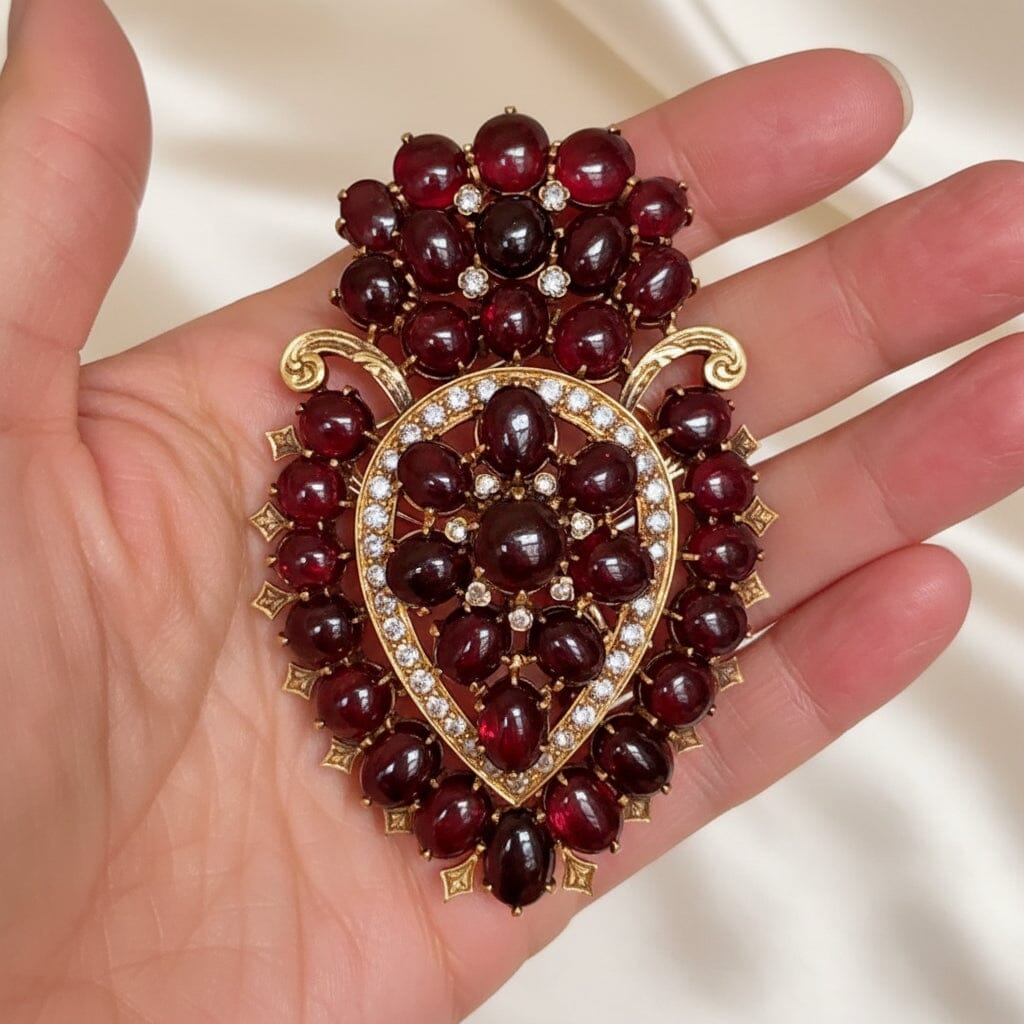
The Exceptional Huge Antique Mine Cut Diamond Garnet Brooch Pendant is a large Victorian piece in warm 14K gold. Deep red garnet cabochons and sparkling diamonds are arranged in the shape of a pineapple, a symbol of warmth and welcome.
It is designed to be worn two ways. A curved pin holds it as a brooch, and a removable bail lets it hang as a pendant. That kind of versatility was a lovely habit of Victorian jewelers, and it makes the piece easy to enjoy today.
Because it comes from the Victorian era, this brooch is antique. And because it has been owned and loved before, it is also an estate piece.
A named era, such as Victorian or Edwardian, plus clear photos, the metal, measurements, and a note on condition. A little gentle wear is normal and part of the charm of a piece that has been worn for generations.
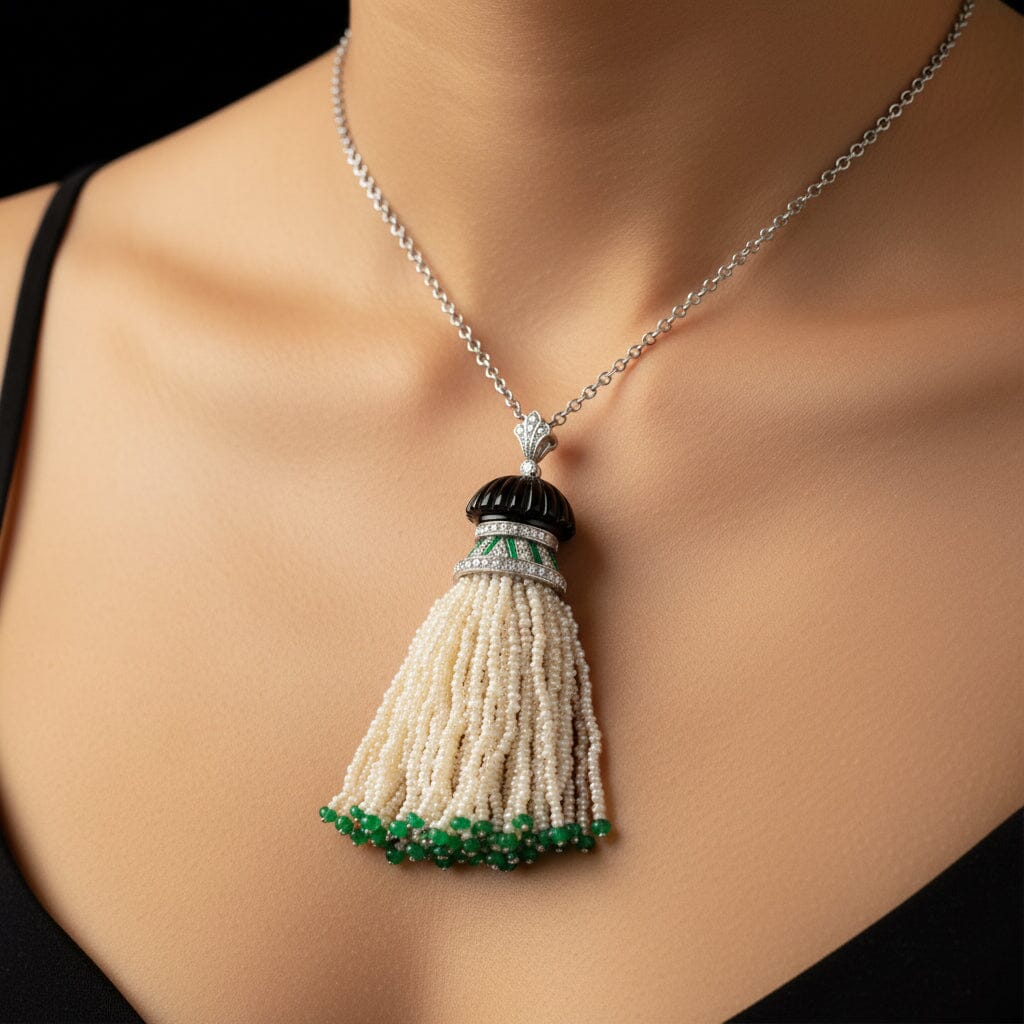
The Antique Art Deco Platinum Pearl Tassel Pendant, Diamond Emerald captures the glamour of the Jazz Age. A black onyx dome sits above bands of diamonds and emeralds, and dozens of seed pearl strands fall below, each tipped with a tiny emerald bead.
The listing dates this pendant to the 1920s, and it is crafted in platinum. The tassel moves softly as you wear it, which is exactly the effect Art Deco designers loved.
It shows that antique jewelry is not one single look. A Victorian garnet brooch and an Art Deco platinum tassel are both antique, yet they feel completely different.
Art Deco jewelry comes from the 1920s and early 1930s, so it sits right around the 100-year mark today. A trusted listing will tell you the era clearly, which makes it easy to know whether a piece is described as antique or vintage.
What Makes Jewelry Vintage
Vintage jewelry comes from an earlier era but is younger than antique. Many people find vintage pieces especially easy to wear every day. They carry the personality of their decade, and they often have a bold, confident style.
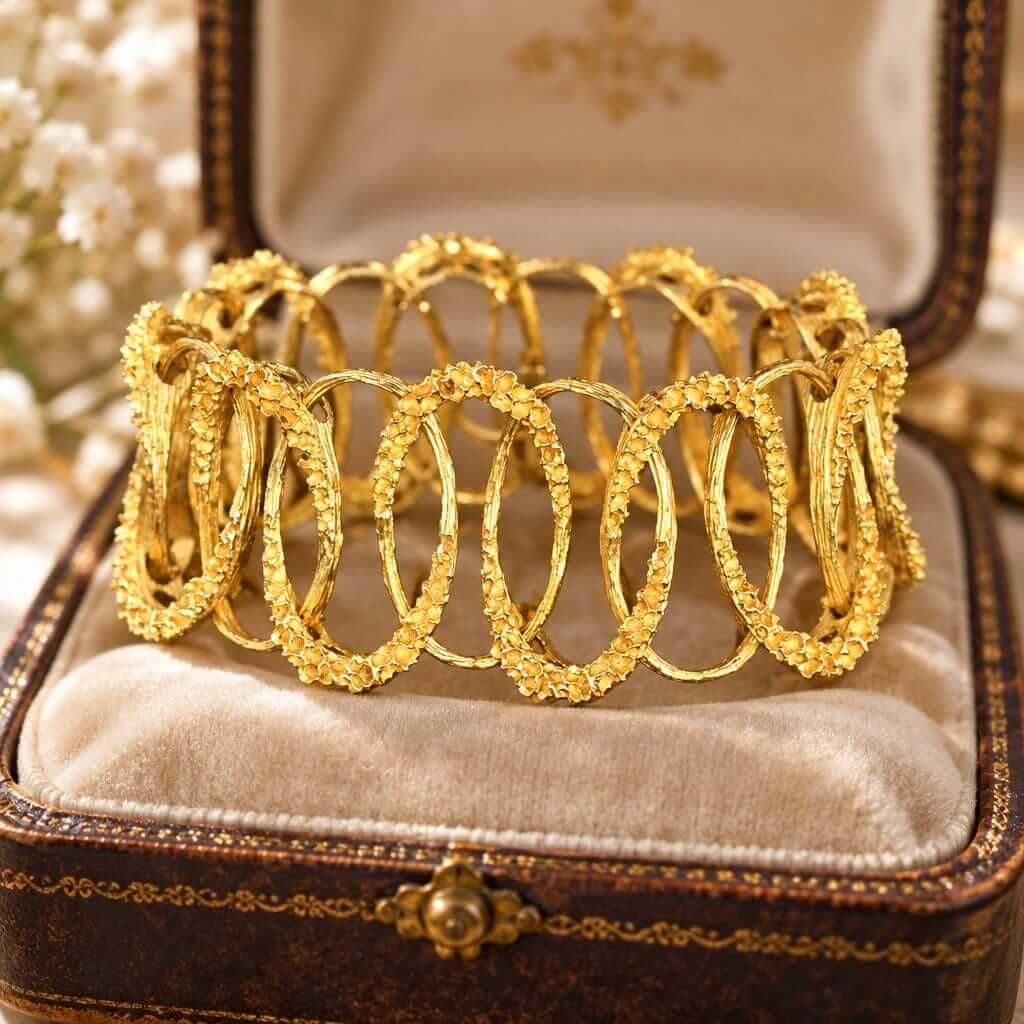
The Vintage Industria Argentina 18K Gold Cuff Bracelet was crafted in Argentina during the 1960s. Wide openwork loops of 18K yellow gold are finished with rich textures, so light moves through the design as you wear it.
At 61.3 grams of solid gold, it has a wonderful weight on the wrist. A concealed slide clasp with a safety pin keeps the look smooth and secure.
A piece from the 1960s is around sixty years old, so this cuff is vintage. It has the sculptural, modern spirit that makes mid-century gold so popular with collectors today.
A decade or design period, such as 1940s Retro or 1960s mid-century, along with the metal, weight, and clear photos. These details help you picture the piece and enjoy the story of its era.
What Makes Jewelry Estate
Estate is the friendliest word of the three, because it only tells you one thing: the piece had a previous owner. It does not tell you how old it is. That is why you will often see estate used alongside antique or vintage.
At Boylerpf, every piece is pre-owned, so in that sense the whole collection is estate jewelry. Each listing then tells you more about the era, so you know whether a piece is antique or vintage as well.
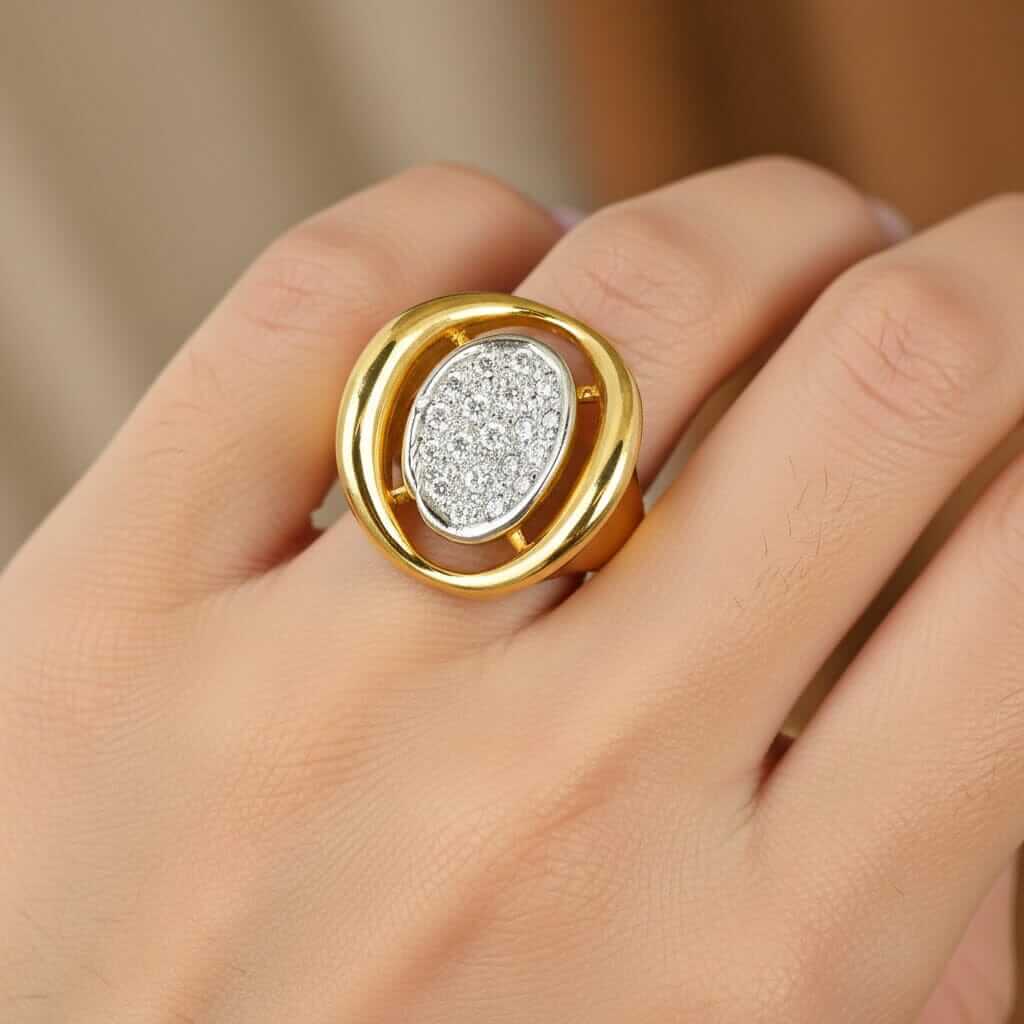
The Vintage Diamond Cluster Ring, 14K Gold .60ct Cocktail Estate is a lovely example of two labels working together. Its name uses both vintage and estate.
Twenty round brilliant-cut diamonds, about .60 carats in total, shimmer in a pavé oval. A bold, sculptural setting in 14K yellow and white gold gives the ring real presence on the hand.
Vintage tells you about its age. Estate tells you it has been owned before. Together they give you the full picture of this glamorous cocktail ring.
Enjoy it as a sign that the piece has a history. If you would also like to know its era, look for words like antique, vintage, or a decade in the listing, or simply ask the shop.
“Antique and vintage tell you how long a jewel has been loved. Estate tells you it has been loved before. The best pieces carry all of that history with them.”
A Simple Way to Remember the Difference
If you only keep one idea from this guide, keep this one: age words and ownership words answer different questions. Here is a quick reference you can come back to anytime.
If you are ever unsure what a word means on one of our listings, just reach out. You can email alicia@boylerpf.com or call 701-535-0798, and we will gladly tell you more about any piece.
Common Mix-Ups, Cleared Up
“Estate means the same thing as antique.”
Estate simply means pre-owned. An estate piece might be antique, but it could just as easily be vintage, like the diamond cluster ring above.
“Vintage and antique are just two ways of saying old.”
They describe different ages. Antique means 100 years or more. Vintage covers younger pieces from a past era, like the 1960s gold cuff.
“Art Deco style and Art Deco are the same.”
Art Deco jewelry was made in the 1920s and early 1930s, like the platinum tassel pendant. “Art Deco style” usually means a newer piece inspired by that look.
Mixing Eras in Your Own Collection
One of the joys of estate, vintage, and antique jewelry is how beautifully the eras can mix. You do not need everything to come from the same decade.
- Start with a statement antique. A Victorian garnet brooch on a coat lapel brings instant history and warmth.
- Add an antique from another era. An Art Deco pearl tassel pendant shows a lighter, more geometric side of antique design.
- Wear vintage every day. A sculptural 1960s gold cuff is bold, comfortable, and easy to pair with almost anything.
- Finish with an estate cocktail ring. A diamond cluster ring adds sparkle for dinners and special occasions.
When each piece is described clearly, mixing them feels natural. If you love the Victorian era, our guide to Victorian Jewelry: Motifs, Meaning and How to Buy is a lovely next read.
Antique, Vintage & Estate Jewelry at Boylerpf
Every piece in our collection is personally sourced and authenticated, with materials identified and condition described honestly. Explore the four pieces from this guide, or browse the full collection for your own favorite era.
Questions Buyers Often Ask
Antique jewelry is at least 100 years old. Vintage jewelry comes from a past era but is younger, usually about 20 to 99 years old. Estate jewelry is simply pre-owned, at any age.
Yes. Estate describes ownership and vintage describes age, so they often appear together. The Vintage Diamond Cluster Ring in this guide uses both words in its name.
Yes. The Victorian era ran from 1837 to 1901, so Victorian jewelry is well over 100 years old. The garnet brooch pendant in this guide is a Victorian antique.
Each Boylerpf listing includes photos, materials, measurements, and condition notes. For anything else, email alicia@boylerpf.com or call 701-535-0798. We are always happy to help.
Keep Reading
More friendly guides from the Boylerpf journal.
Antique, vintage, or estate, every piece has a story. We would love to help you find the one that feels like yours.
Browse Estate, Vintage & Antique Jewelry at Boylerpf →